Nansha Phase III of Guangzhou Port Puts 20 More Battery-Electric Terminal Tractors into Service
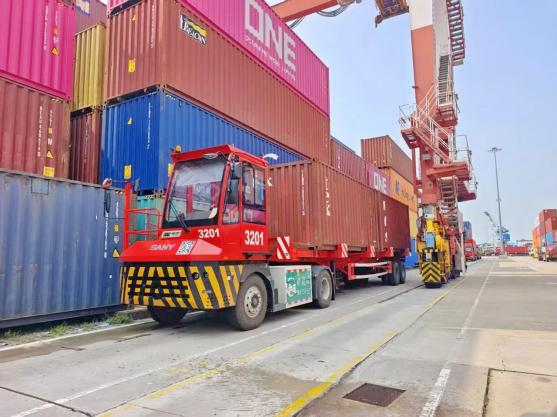
A batch of 20 battery-electric terminal tractors was recently delivered and put into service at Nansha Phase III, bringing its fleet of battery-electric tractors to 137. This large-scale rollout of new energy equipment further strengthens the foundations of a green, smart port.
The STT2500E-D battery-electric terminal tractors now in service use a 4×2 drive configuration and a 282 kW·h high-capacity lithium battery pack, with a high-efficiency permanent-magnet synchronous single-motor direct-drive layout. Their electronic control algorithms have also been extensively optimized, raising drive efficiency by about 5% under common operating conditions. Under standard operating conditions in the port area, continuous operating range has risen from 135 km to 151 km and continuous daily operating time has been extended from 18 hours to 20 hours, giving endurance and stability well matched to the terminal's high-intensity, continuous production. Each battery-electric tractor is calculated to save about 10,300 kWh of energy a year and to cut overall energy costs by about 10.6%, a marked gain in both energy saving and cost reduction.
In recent years, Nansha Phase III has steadily pursued a green overhaul of its handling and haulage equipment, with low-carbon retrofit projects under way on several fronts. The diesel-to-electric conversion program for rubber-tyred gantry cranes has so far upgraded 10 units to remote-controlled automated operation, saving 126.7 tonnes of diesel and cutting carbon emissions by about 340 tonnes a year; once the remaining 50 units are converted, expected by 2028, the cranes' annual carbon saving will reach 1,900 tonnes. As early as 2021, the terminal converted 73 diesel tractors to new energy technology, and has since brought 137 new energy tractors and eight battery-electric stackers into service across the site. Together, these green assets save Nansha Phase III about 3,334 tonnes of diesel and more than 10,000 tonnes of carbon a year — an impressive "green report card".(Text & Photo | Zhu Zhaobo)
News
- Guangzhou Port Becomes the World's First Port with Full Green Methanol Bunkering Coverage Across Ship Types
- Guangzhou Port Sinotrans Automotive Supply Chain Co., Ltd. Unveiled in Nansha
- Guangzhou Port Attends the Roundtable of the Silk Road Maritime International Cooperation Forum
- Asia-Pacific Media Delegation Visits Guangzhou Port's Nansha Port Area, Experiencing the Openness and Dynamism of the Smart Mega Port
- Guangzhou Port's Nansha International General Terminal Releases Over 12 Million Aquatic Juveniles in Stock Enhancement Program