Guangzhou Port Co., Ltd. Becomes Guangdong's First Bonded Trading Warehouse for Soybeans in the Offshore Spot Market
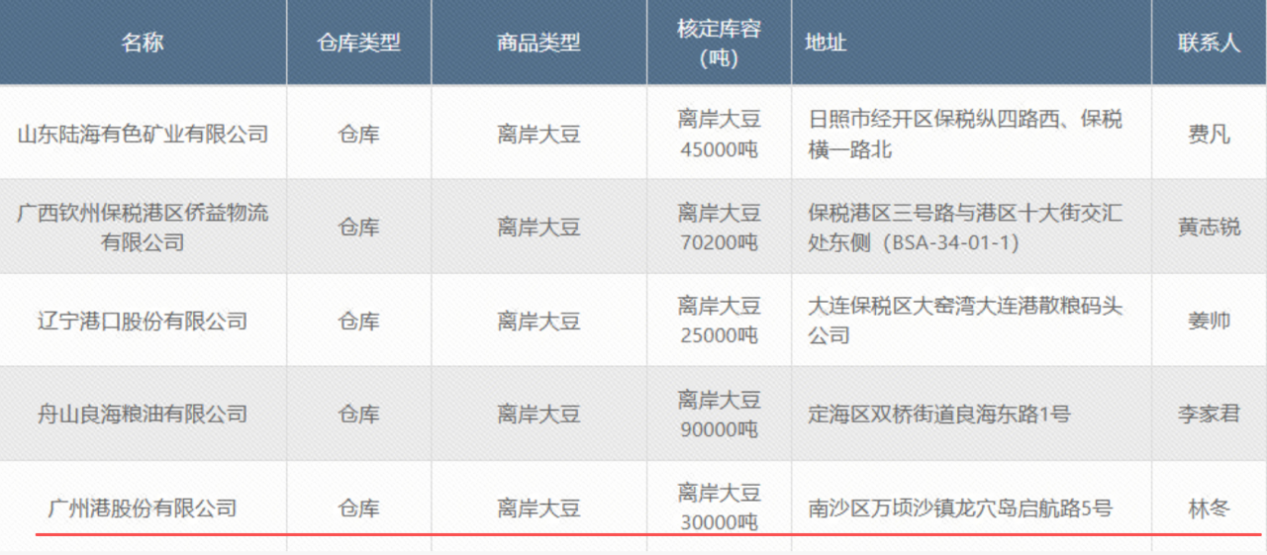
Recently, Guangzhou Port Co., Ltd. was granted the qualification as a designated soybean delivery institution by the Qianhai Mercantile Exchange (QME). The warehouse, located at Nansha Grain and General Cargo Terminal Branch of Guangzhou Port Co., Ltd. (hereinafter referred to as “Nansha Grain Terminal”), has an approved storage capacity of 30,000 metric tons. This achievement makes Guangzhou Port the fifth entity such warehouse in China and the only soybean offshore spot market bonded trading warehouse in Guangdong Province. This move marks a significant step forward in enhancing the comprehensive service capabilities of the bulk commodity supply chain.
The establishment of the soybean offshore spot market is a key strategic initiative rolled out by the central government to safeguard the security of the national grain supply chain and strengthen China's pricing power in imported grain. In alignment with the overall national grain security strategy, and with the active promotion and strong support of customs supervision authorities, Guangzhou Port Co., Ltd. promptly responded to policy guidance and worked closely with Nansha Grain Terminal to prepare for the necessary qualification application.
On October 17, 2025, the Department of Animal and Plant Quarantine, the Department of Port Control, and the Department of Enterprise Management and Audit-Based Control of the General Administration of Customs jointly issued the "Notice on Further Regulating the Inspection and Quarantine Supervision of Inbound Offshore Spot Trading Soybeans." This notice systematically clarified key regulations regarding the registration of supervision information and the inspection and quarantine supervision of imported soybeans, completely addressing significant bottlenecks that had previously hindered business implementation. With professional guidance and targeted support from Guangzhou Customs and Nansha Customs, Guangzhou Port Co., Ltd. carefully followed regulatory requirements to enhance site facilities, refine management systems, and standardize application materials, ensuring the successful verification of the bonded trading warehouse.
On December 8, 2025, Nansha Grain Terminal was officially included in the list of approved imported offshore spot-traded soybean bonded trading warehouses by Guangzhou Customs, confirming that the company possesses the qualifications and operational conditions necessary to conduct soybean offshore spot deliveries. This milestone marks the beginning of steady and orderly progress in related operations.
In comparison to the traditional import model, the soybean offshore spot delivery model offers greater flexibility. Imported soybeans can be freely traded, transferred, and distributed within the bonded trading warehouse, allowing clients in the soybean industry to respond more quickly and autonomously to market changes. With QME's one-stop services, this model enables the secure and convenient online completion of services such as trading, delivery, settlement, and financing for imported soybeans. This approach allows Guangzhou Port to leverage its storage capacity advantages and accelerates the development of a soybean distribution center in South China.
As a key grain trading hub in the Guangdong-Hong Kong-Macao Greater Bay Area, Nansha Grain Terminal boasts a grain storage capacity of 2 million metric tons, an annual grain receiving and unloading capacity of 16 million metric tons, and an annual throughput of 32 million metric tons, making it the largest grain logistics base in South China. Moving forward, Nansha Grain Terminal will collaborate with port authorities and QME to build a comprehensive full-chain service system that spans from overseas production sources to domestic processing plants and warehouses. By continuously optimizing bonded trading warehouse services, expanding overseas supply channels, and attracting new clients and new businesses, Nansha Grain Terminal will further enhance the port’s integrated logistics service capability, so as to make significant contributions to strengthening the region’s grain security, promoting industrial upgrading, and facilitating trade.(Text | Lin Tong)
News
- Guangzhou Port Co., Ltd. Signs Strategic Cooperation Framework Agreement with Ansteel Lianzhong and SITC International
- Inaugural Run of "Nansha Port - Ganzhou International Port" Sea-Rail Intermodal Cold Chain Train
- Guangzhou Port Co., Ltd. Becomes Guangdong's First Bonded Trading Warehouse for Soybeans in the Offshore Spot Market
- Guangzhou Port Co., Ltd. and China Certification & Inspection Group Guangdong Sign Strategic Cooperation Agreement
- Huang Bo Attends the Convention between Carriers and Ports for Ocean Alliance 2026 and Delivers a Keynote Speech